
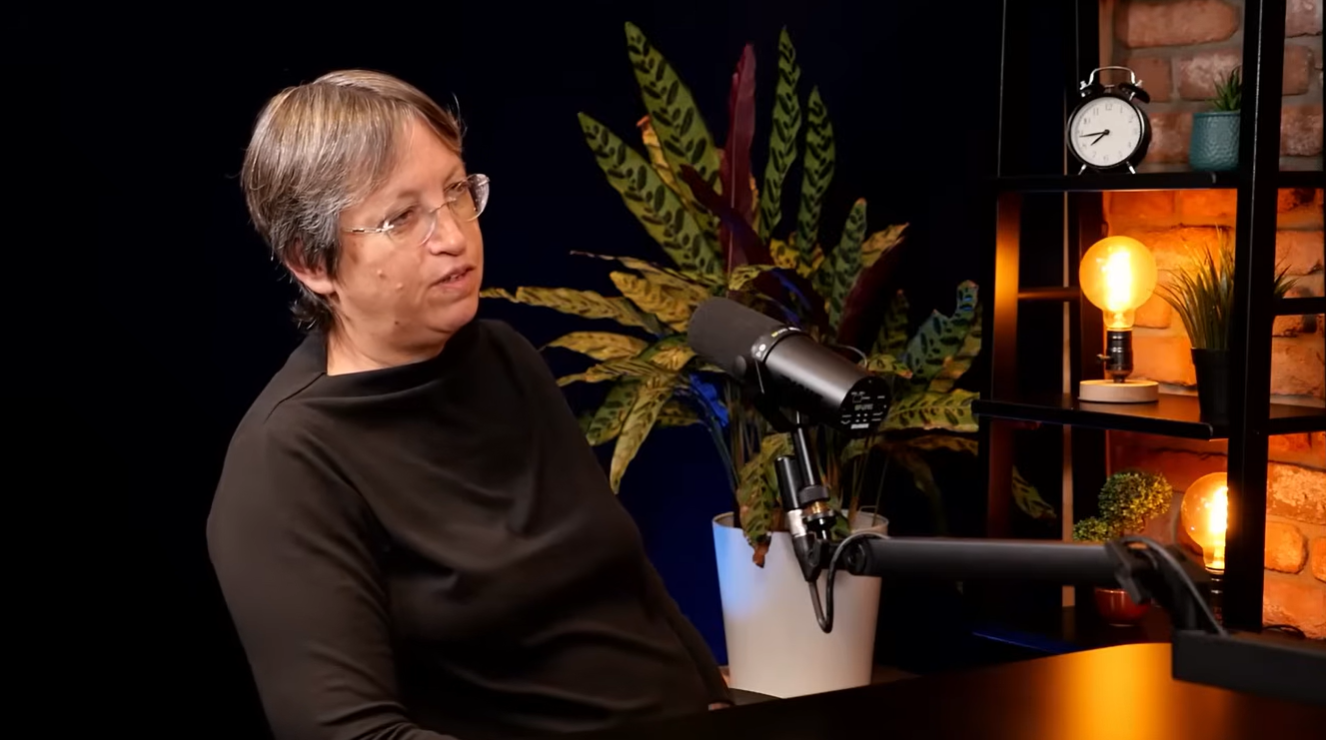
The Investment Train Podcast – Dorit Dor, Co-Founding Partner of a Quantum Technologies Investment Fund – The Quantum Revolution
Podcast Summary
In this episode, we dive into one of the most fascinating and least understood technological revolutions of our time — quantum computing — together with Dorit Dor, former CTO of Check Point and currently Managing Partner at the QBEAT fund. Dorit explains how the quantum computer changes the rules of the game through exponential parallel computation, capable of solving problems that classical computers will never be able to crack — from breaking cybersecurity encryption to developing new drugs and materials. The conversation highlights the unique investment window that exists right now, just before the technology reaches full commercial maturity, and examines Israel's comparative advantage thanks to its exceptional human capital and pool of physicists. This is a story about the transition from scientific theory to business reality that is expected to reshape the world order, and about the need for investors and organizations to prepare today for tomorrow's computing infrastructure.
Watch the Full Podcast
A computer that can solve in seconds problems that would take the world’s best computers millions of years? It sounds like science fiction — but it’s reality, and it’s happening right now. More than a thousand companies, tens of billions of dollars in investments, and giants like Google, BMW, and JP Morgan have already set up internal quantum units. The market is maturing, and the investment window is opening.
Key Points as Presented in the Podcast:
The Essence of the Quantum Revolution: From Sequential to Exponential Parallel Processing
While a classical computer processes data sequentially (one after another), a quantum computer uses units of information (qubits) that can exist in multiple states simultaneously. Dorit explains that this allows the computer to calculate all possibilities at once rather than going through them one by one. This capability is critical for solving problems that classical computers will never be able to solve — such as factoring enormous numbers into primes (the basis of modern encryption).
Applications Beyond Cyber — From Materials to Medicine
Although the threat to encryption is the most discussed topic, Dorit emphasizes the potential in civilian uses. The quantum computer operates according to the laws of physics, making it excellent at complex physical simulations. This includes discovering new materials (for batteries or fertilizers), developing drugs by understanding molecular interactions, and optimizing energy systems and flow.
The Investment Timing — The "Window of Opportunity" Is Now
Dorit argues that we are approximately two years away from the moment when quantum computers will cross the "simulation threshold" (Quantum Supremacy) — the point at which a classical computer will no longer be able to emulate them. She compares the current situation to the early days of the internet or cybersecurity 30 years ago. The investment opportunity exists precisely now, while the field is still nascent and the answers to final applications are not yet "sharp" — because by the day everything is proven, the value will already be priced in.
The Importance of the Ecosystem and Academia in Israel
Israel benefits from a very strong academic foundation in physics (thanks to programs like "Talpiot"), but Dorit warns that to maintain leadership, the link between academia and industry must be strengthened. She notes that quantum startups are characterized by multidisciplinary teams that include physicists and mathematicians, not just software engineers. She argues that Israel needs to build a "safety net" that prevents brain drain and preserves its status as a global technological leader in this foundational field.
Want to register for the next podcast?
Register