
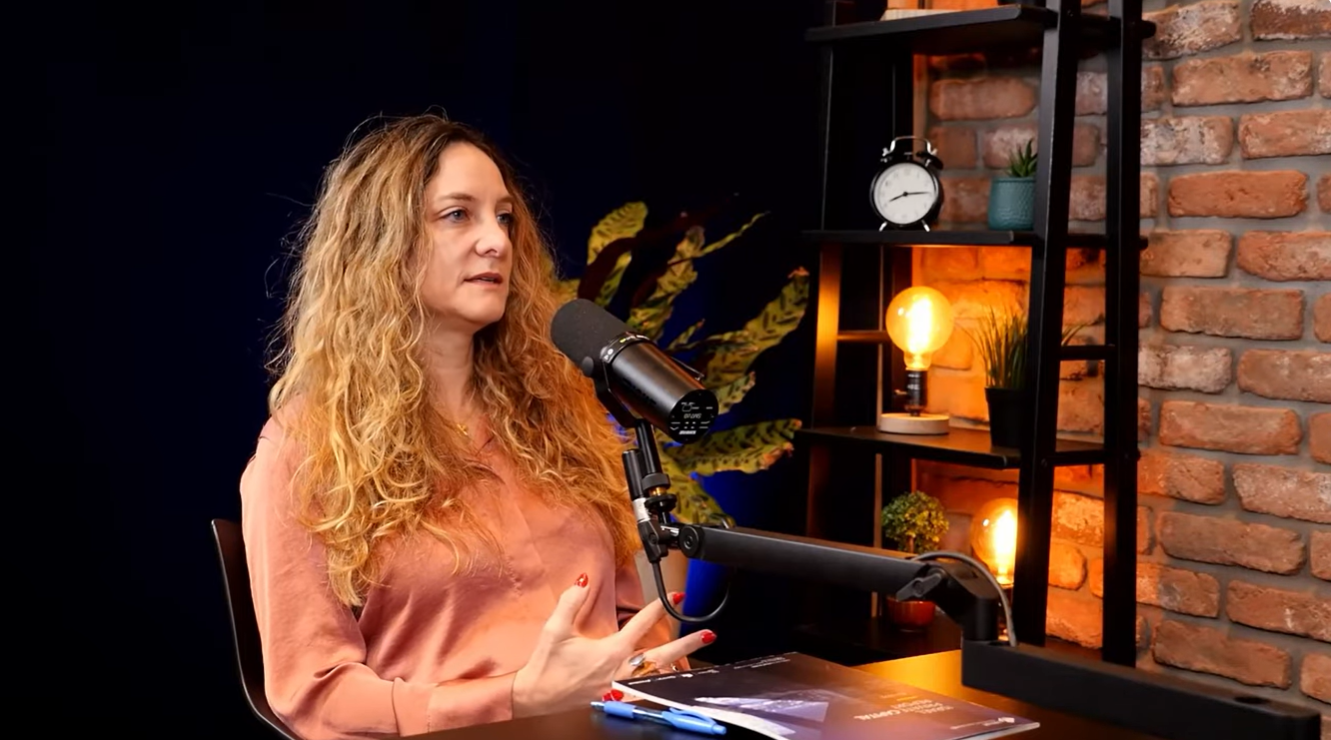
The Investment Train Podcast – Private Investment Funds with Inbar Steiner
Podcast Summary
Israel's non-traded market is undergoing a revolution. Feeder funds and open-ended funds are making alternative investments more accessible than ever before, but Inbar Steiner of Value Investments warns: "New qualified investors need professional guidance." In a fascinating conversation on the Investment Train Podcast with Dor Markowitz-Rot, Steiner reveals the major opportunities of the coming period: the infrastructure world as a shelter from volatility, the secondary market developing in the wake of the growing primary market, and the special situation that will arise from the anticipated debt maturity wall. "We are heading into a wall of debt," Steiner explains. According to her, companies that took on loans in the zero-interest-rate era are now facing a new interest rate environment — creating opportunities for Special Situation funds, but also requiring careful manager selection. What's the solution? According to Steiner, it is essential to choose managers with a proven track record. Or, as she sums it up: "Human capital is what makes the difference from one firm to another."
Watch the Full Podcast
Key Points as Presented in the Podcast:
The Importance of Feeder Funds in Democratizing Investments
Inbar explains that most global investment funds require very high minimum entry amounts ($5–10 million), which blocks qualified private investors. A feeder fund aggregates smaller investors into a single large entity. Beyond accessibility, the main advantage is the power of the group: thanks to the large combined ticket, investors receive institutional-level terms, full transparency, and personal "concierge" service that they would not have received as individual investors.
The Secondary Market Strategy as a Leading Opportunity
The secondary market is highlighted as a particularly attractive arena today, especially in infrastructure and debt. Inbar notes that these areas have less competition (low dry powder) compared to traditional private equity. Buying in the secondary market allows investors to enter more mature assets, sometimes at a discount, and to bypass the "J-Curve" (the loss period at the beginning of a fund's life), while generating faster cash flow.
Risk Management and Due Diligence
Unlike the traded market, where information is available at the click of a button, the alternative market places critical importance on the due diligence process. Inbar recommends examining the manager's "investment discipline" across three dimensions: • Performance in crisis: Did the manager experience 2008 or 2020, and were they able to manage assets through the downturn? • Transparency and integrity: Is the manager willing to disclose the full data room, or only filtered data? • Tax structure: A critical point for Israeli investors — an improperly structured feeder fund tax arrangement can erode the entire return.
The Role of Non-Traded Investments in a Balanced Portfolio
The conversation emphasizes that alternative investments are not a complete substitute for the capital markets, but rather a complementary component designed to reduce volatility and generate alpha. Inbar notes that globally (in the US and Europe), family offices are already increasing their allocation to non-traded assets to 30–50% of their portfolio. However, she cautions that such investments must be matched to the client's specific liquidity needs.
Want to register for the next podcast?
Register